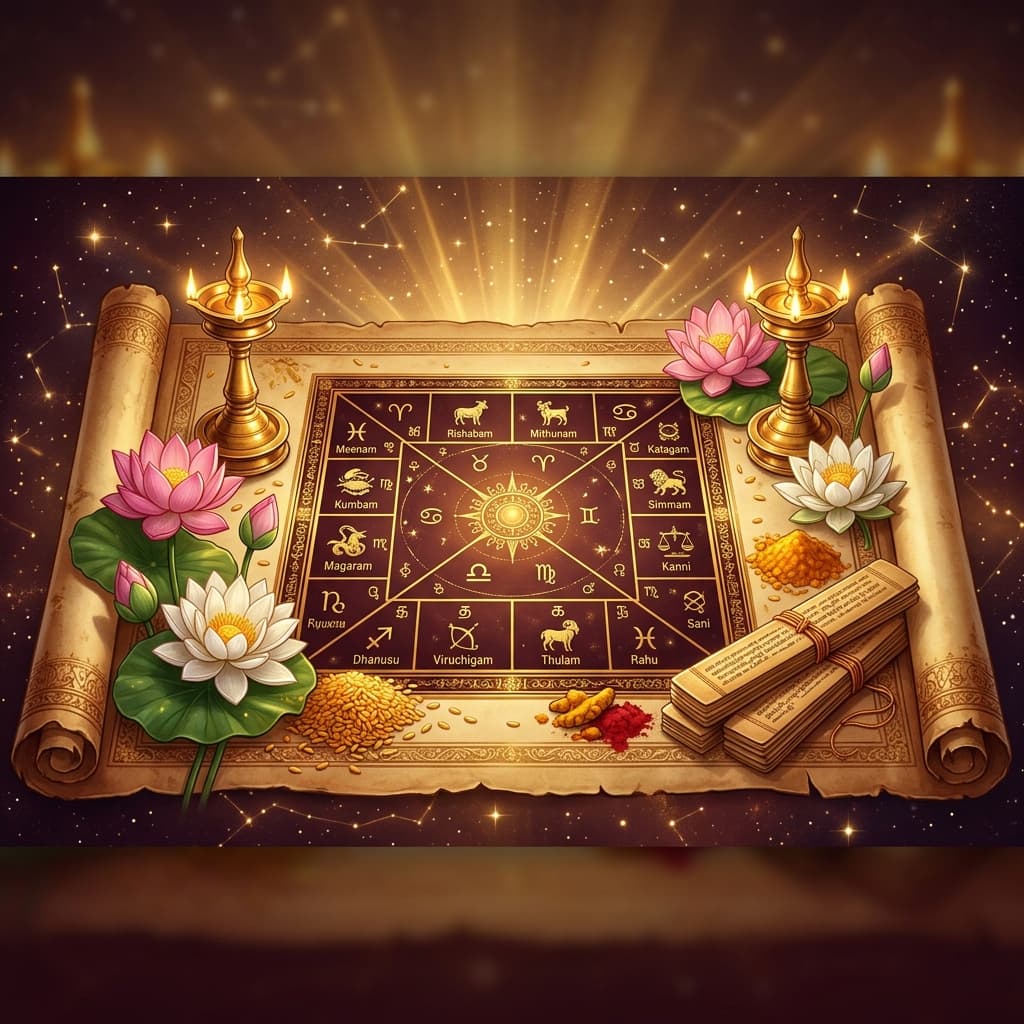
1. Why the 8th and 9th Houses Take Over
In a first-marriage reading, the 7th house dominates almost every conversation. Bring the same charts back for a second-marriage evaluation, and an experienced astrologer's attention shifts noticeably - toward the 8th house, which governs the longevity of the union itself, and the 9th, which represents a second partnership, dharma, and hard-won wisdom.
When Jupiter or Venus supports the 9th house lord specifically, that's read as a strong signal that the second chapter will bring genuine emotional repair, financial steadiness, and a partnership built on mutual respect rather than the same patterns that may have strained an earlier marriage. The 9th house, in this context, represents more than luck - it represents the wisdom carried forward from what came before.
2. Reading the Current Dasa With More Weight Than Usual
For a second marriage, checking whether both partners are running favorable Dasa-Bhukti periods matters even more than it typically does for a first marriage. It's less about compatibility on paper and more about whether both people are, right now, in a chapter of life that supports building something new.
Someone who struggled through a difficult Rahu or Saturn Dasa the first time around, and who's now entering a Mercury, Venus, or Jupiter period, is generally seen as approaching remarriage from a genuinely stronger footing - carrying real confidence and steadiness into it rather than residual anxiety from what came before.
3. Rajju and Rasi Athipathi Still Aren't Optional
Some of the secondary star matches get evaluated with more flexibility the second time around, but Rajju Porutham and Rasi Athipathi Porutham hold their ground. Rajju still protects long-term physical health and stability, and sign-lord friendship still underwrites whatever companionship the marriage will run on day to day. Skipping these two checks because "it's a second marriage anyway" is a genuine mistake worth avoiding.
4. When Children Are Already Part of the Picture
If either partner is bringing children from a previous marriage into this one, the astrologer's attention extends to the 5th house - the house of children - checking how it interacts across both charts. A benefic Jupiter influence there tends to correlate with a smoother, more naturally supportive step-parenting dynamic, which matters enormously for how the blended family actually settles in day to day.
5. Remedies Suited to This Particular Chapter
Temples associated with Shiva and Parvati together - Thiruvidaimarudur and Kanchipuram among the more commonly visited - are traditionally favored for remarriage blessings. Offering archanai there is said to clear residual karmic weight from the earlier marriage, making room for the second chapter to open on its own footing rather than under the shadow of the first.
6. Handling a Divorce or Widowhood Chart With Care
Charts belonging to someone who has gone through a divorce or the loss of a spouse deserve a particular kind of attention that first-marriage matching simply doesn't call for. The astrologer typically looks closely at what triggered the earlier marriage's end astrologically - whether it traced to an unresolved Sevvai Dosham, a difficult Dasa period, or a poorly supported 7th house - and checks whether that specific configuration has since passed or is still active.
This isn't about assigning blame to a chart for what happened before. It's about making sure the same unaddressed pattern doesn't simply repeat itself in the next marriage. When the earlier trigger has genuinely passed - the Dasa has moved on, or a remedy has been completed - astrologers are generally far more confident recommending the second match proceed without reservation.