1. Treating the App Score as Gospel
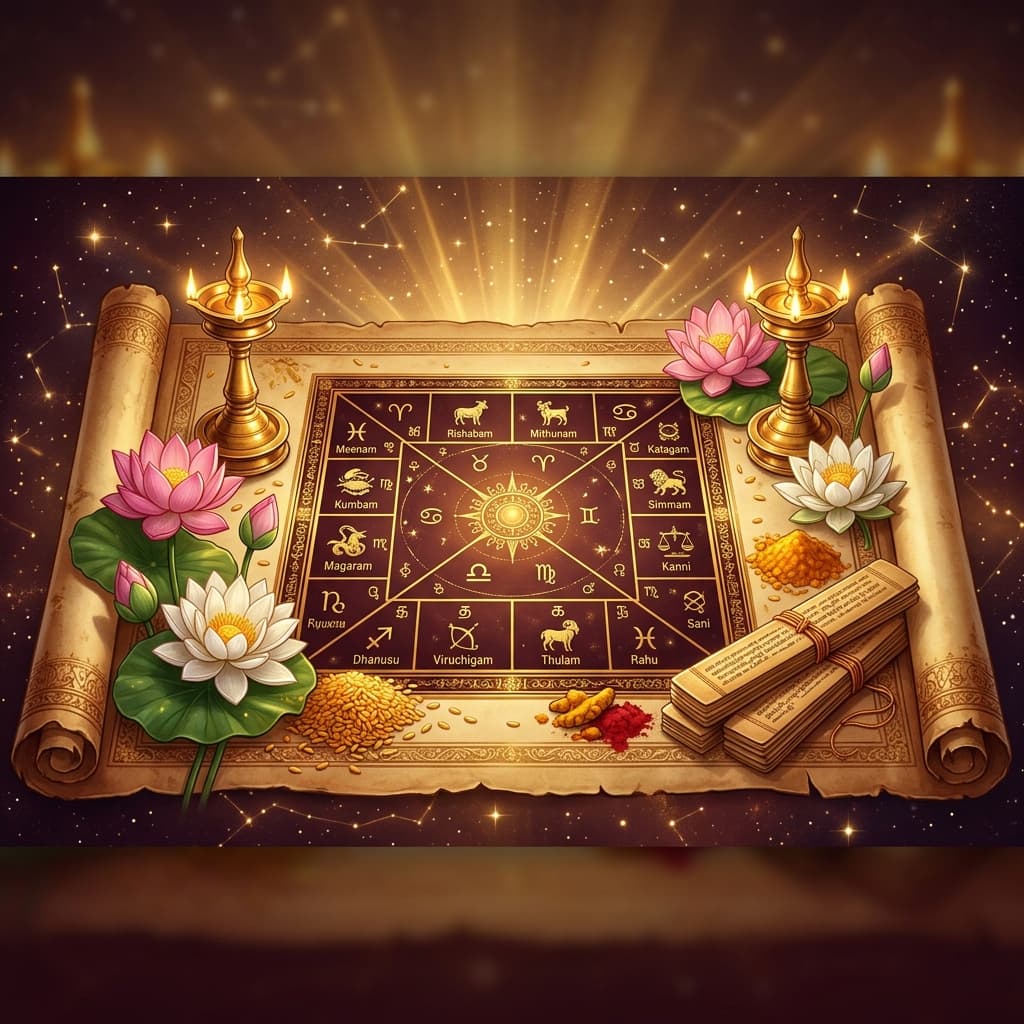
It usually starts innocently enough - someone opens a matching app on their phone during a family gathering, types in two birth details, and within seconds a number pops up: 74%, or 7.5 out of 10, rendered in confident green text. The trouble is that number carries none of the nuance a human astrologer would apply. It can't tell you that a "weak" Dina Porutham is meaningless because Jupiter is sitting directly on the 7th house cusp, and it definitely can't catch that the groom's Mars is exalted, which changes the entire read on his Sevvai Dosham.
None of this means the apps are useless. They're a decent first filter, especially when a family is looking through a dozen proposals and needs to narrow the field before spending money on consultations. The mistake is stopping there. A software tool tallies star distances against a fixed table; it has no way of judging whether a planetary exchange (Parivartana) or a benefic aspect quietly cancels out what looks, on paper, like a deficiency.
2. Checking Mars From Only One Reference Point
Here's a mistake that trips up even well-meaning relatives who've read a bit about astrology online: they check Mars purely against the Moon sign and stop there. Classical practice actually requires checking Mars from three separate points - the Lagna, the Moon, and Venus - and the dosha only really carries full weight when it shows up consistently across most or all three.
Say Mars sits in the 2nd house counted from the Moon but lands in a perfectly friendly house from the Lagna. That's a materially different situation than Mars showing up as a problem from all three reference points at once, yet families frequently reject proposals based on the single Moon-sign reading alone. Our Sevvai Dosham Guide walks through the correct three-point method in detail.
There's a further wrinkle that gets missed almost every time: Mars sitting in its own sign (Aries or Scorpio) or its exaltation sign (Capricorn) behaves very differently from Mars sitting in a weak or hostile placement. And if Jupiter happens to be aspecting Mars, classical texts describe that aspect as diffusing the malefic charge almost entirely - Guru Kataksham, divine oversight, essentially neutralizing the heat. Skipping this nuance is how a genuinely fine match ends up in the rejected pile.
3. Ignoring the Exception Rules Baked Into the Tradition
People sometimes assume that classical astrology is rigid - a strict pass/fail system with no room for context. That's not really accurate. The old texts are full of built-in exceptions (Nivirthi rules) that account for exactly the kind of situations that would otherwise sink a decent proposal.
A common one: when both charts share sign lords that are natural friends - Mercury and Venus, say, or Sun and Jupiter - minor star mismatches lose most of their bite, because the underlying planetary relationship is already supportive. See how sign-lord friendship is evaluated in Rasi Athipathi Porutham. Certain Nakshatra pairings also carry their own exception clauses for Rajju or Vedha that most casual matching checks never bother to look up.
Take a case where both people happen to be born under Venus-ruled signs - one in Taurus, one in Libra. That shared rulership alone tends to produce natural rapport, enough that a couple of missing secondary poruthams (Dina or Gana falling slightly short, for instance) rarely translates into any real friction once the marriage actually begins.
4. Never Checking For Dasa Sandhi At All
This is probably the least understood mistake on this list, mostly because it's invisible unless someone specifically looks for it. A report can show a comfortable 7 out of 10 with balanced Papasamayam, and everyone in the family relaxes - understandably. But if both partners are due to enter a new major Dasa period within a few months of each other, right around the wedding, that timing detail changes the texture of the first year or two of married life in ways the porutham score has nothing to say about.
Astrologers who catch this early can recommend a short pariharam, a small adjustment to the wedding date, or simply a heads-up to the couple that the first year might feel like more of an adjustment period than usual - which, frankly, is useful information regardless of what you believe about planetary influence.
5. Overlooking the 7th House Lord and the Navamsha Chart
Star matching gets so much attention that the house-lord analysis often gets skipped entirely, especially in quick consultations. But a 7th house lord sitting in a kendra (1st, 4th, 7th, 10th) or trikona (1st, 5th, 9th) house adds real structural stability that ten-point tallies simply don't capture. A planet that looks unimpressive in the main Rasi chart can turn out to be strong - even exalted or Vargottama - in the Navamsha (D9), and that divisional chart is, in many traditional views, a truer indicator of how the marriage will actually unfold day to day.
6. Shopping Around Without Standardizing the Birth Details
Families sometimes take the same two horoscopes to three or four different astrologers, hoping for reassurance, and end up with three or four slightly different verdicts instead. It's rarely because one astrologer is wrong and another is right - it's usually because they're working from different almanac systems (Vakya versus Thirukkanitha), which shift Nakshatra boundaries and Dasa years by small but consequential margins.
The fix is simple, if a little unglamorous: agree on one almanac system across the family (Thirukkanitha tends to be the modern default for its astronomical accuracy), and settle on one trusted astrologer who reviews the full chart set - Lagna, Rasi, Navamsha, and running Dasa - rather than collecting a stack of conflicting opinions.